
Eating Twice as Well During Your Pregnancy
In this article:
You’ve probably heard the phrase “eating for two”, and while it’s a little misleading (you don’t actually need double the calories), the sentiment gets at something real. Pregnancy is one of the most nutritionally demanding seasons of a woman’s life. What you eat directly affects your health, your energy levels, your recovery, and the development of your growing baby.
The good news is that eating well during pregnancy doesn’t have to be complicated or restrictive. It’s mostly about being intentional, and knowing what your body and your baby need most right now.
CMC Women’s Health provides comprehensive prenatal care from your first appointment through delivery and beyond. Your provider can review your nutritional needs, order labs, and make personalized recommendations for your pregnancy. Call 843-347-7216 to schedule. Learn more at HERE.
How Many Calories Do You Actually Need?
Here’s where “eating for two” can steer women wrong. During the first trimester, most women don’t need any additional calories at all. In the second trimester, the recommendation increases by approximately 340 calories per day. By the third trimester, that rises to about 450 additional calories per day.
That’s not two meals’ worth of extra food. It’s more like a small, nutritious snack.
“One of the most common misconceptions I see is that pregnancy is a time to eat whatever you want because you’re going to gain weight anyway,” says Abby Rewoldt, MD at CMC Women’s Health. “That is definitely not the case. In reality, those extra calories should be doing real work. Those calories should be coming from nutrient-dense foods that are actively supporting your baby’s development.”
The Most Important Nutrients During Pregnancy
Folic Acid / Folate
Critical in the earliest weeks of pregnancy — often before you even know you’re pregnant — folic acid helps prevent neural tube defects. Women who are pregnant or trying to conceive are recommended to take 400–600 micrograms of folic acid daily, typically through a prenatal vitamin.
Iron
Your blood volume increases significantly during pregnancy, and your body needs iron to keep up with that demand. Iron supports the delivery of oxygen to your baby. Low iron is one of the most common nutritional deficiencies in pregnancy and can lead to fatigue and anemia.
Calcium
Your baby’s bones and teeth are developing throughout pregnancy, and if your diet is low in calcium, your body will pull it from your own bones. Aim for 1,000 mg per day from food sources when possible.
Omega-3 Fatty Acids (DHA)
DHA supports fetal brain and eye development. It’s found primarily in fatty fish and in prenatal vitamins that include DHA.
Protein
Protein is the building block of your baby’s tissues and supports the growth of your uterus, placenta, and breast tissue. Most pregnant women need at least 70–100 grams of protein per day.
Vitamin D
Works in partnership with calcium for bone health in both mom and baby. Many women are deficient in vitamin D which is something your Women’s Health provider can have checked with a simple lab test.
Choline
Often overlooked but increasingly recognized as essential, choline supports brain development and helps prevent neural tube defects. Eggs are one of the best dietary sources.
Foods to Focus On
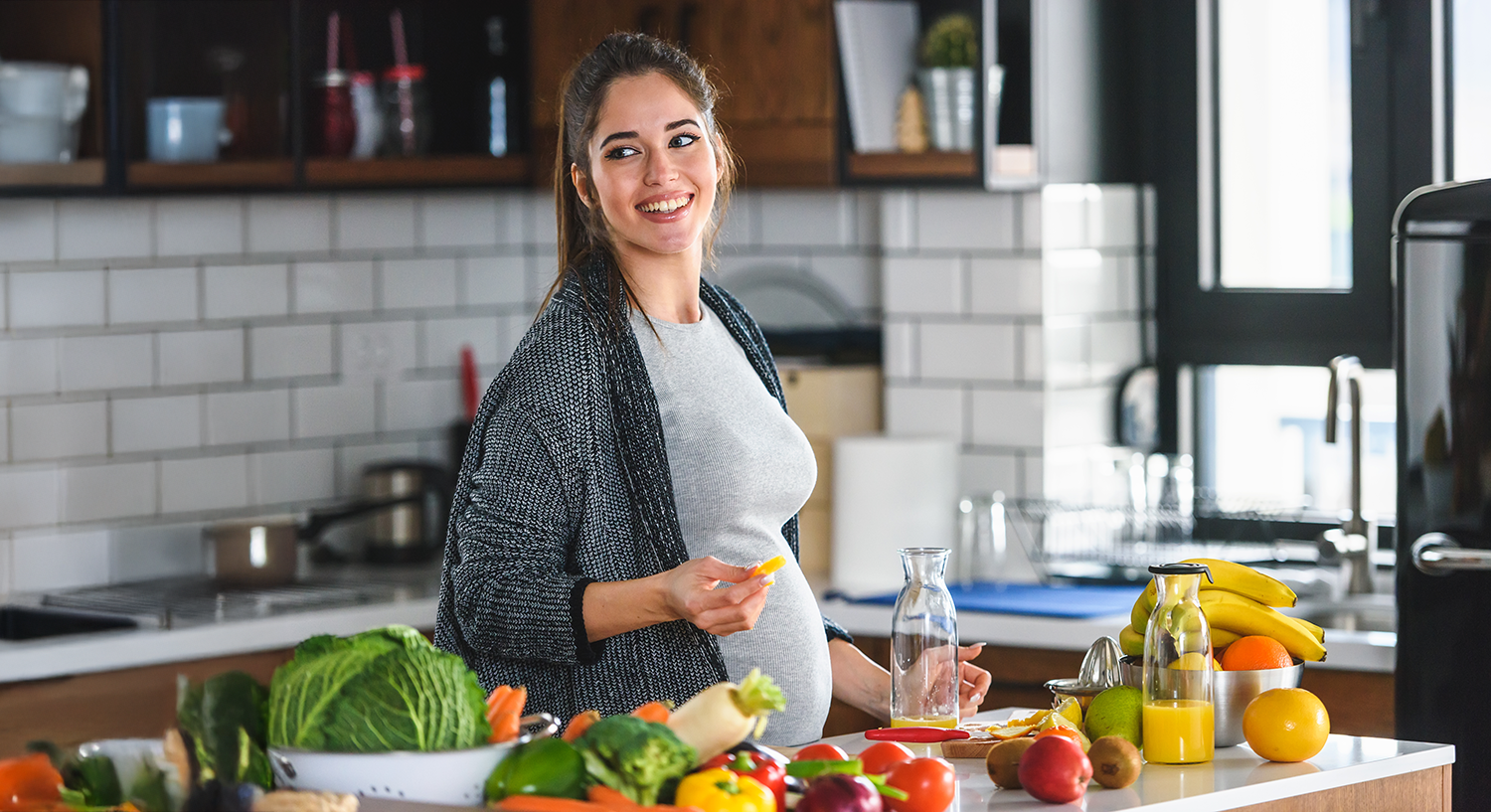
Think of your plate as an opportunity. Every meal is a chance to give your body and your baby what they need. Prioritize:
- Leafy greens (spinach, kale, arugula) — folate, iron, calcium, and fiber all in one
- Eggs — protein, choline, vitamin D, and healthy fats
- Lean proteins — chicken, turkey, lean beef, beans, and lentils
- Fatty fish (salmon, sardines, trout) — DHA, protein, and vitamin D; limit to 2–3 servings per week and choose low-mercury options
- Dairy or fortified dairy alternatives — calcium and protein
- Whole grains — fiber, B vitamins, and sustained energy
- Colorful fruits and vegetables — antioxidants, vitamin C, and fiber
- Nuts and seeds — healthy fats, protein, and magnesium
- Legumes — iron, folate, protein, and fiber
“A prenatal vitamin is an important safety net, but understand that it works best alongside a balanced, whole-food diet – not as a substitute for one,” explains Dr. Rewoldt.
Foods to Avoid or Limit
Pregnancy also comes with a list of foods to steer clear of or keep to a minimum:
- Raw or undercooked seafood, meat, and eggs — risk of bacteria and parasites including listeria and salmonella
- High-mercury fish — shark, swordfish, king mackerel, and tilefish should be avoided; limit albacore tuna to one serving per week
- Unpasteurized dairy and soft cheeses — listeria risk
- Deli meats and hot dogs — unless heated to steaming hot; again, listeria
- Alcohol — no amount is considered safe during pregnancy
- Excess caffeine — current guidelines recommend staying under 200 mg per day (about one 12 oz cup of coffee); some providers recommend less
- Raw sprouts — another listeria concern
- Unwashed produce — always wash fruits and vegetables thoroughly
When in doubt, ask your Women’s Health provider. The goal isn’t anxiety around every meal; it’s helping you make informed choices.
Managing Common Eating Challenges During Pregnancy
Here’s the part that books don’t always prepare you for: sometimes your body just won’t cooperate. You know you should be eating leafy greens and lean protein, but the thought of either makes your stomach turn. That’s okay, and it’s incredibly common. These are the most frequent eating challenges pregnant women face, and how to work through them.
- Morning sickness: Despite the name, nausea can strike any time of day. Small, frequent meals tend to be easier to tolerate. Bland carbohydrates like crackers or toast, ginger tea, and cold foods (which have less smell) can help. If nausea is severe or persistent, talk to your Women’s Health provider because there are safe options to help.
- Food aversions: It’s completely normal to find that foods you used to love suddenly repel you. Don’t force them. Work around aversions by finding nutritional substitutes for the foods you’re avoiding.
- Heartburn: As your uterus grows, it pushes on your stomach and can worsen acid reflux. Eating smaller meals, avoiding lying down after eating, and limiting spicy or acidic foods can reduce discomfort.
- Constipation: Progesterone slows digestion during pregnancy. Increasing fiber intake, staying hydrated, and light physical activity can help keep things moving.
“Pregnancy nutrition doesn’t have to be perfect every day,” Dr. Rewoldt notes. “What matters is the overall pattern. When my patients are struggling with nausea or aversions, I always remind them that getting something in is better than nothing. It’s okay to work with what your body allows.”
Questions about what to eat, what to avoid, or how to manage pregnancy symptoms? The team at CMC Women’s Health is here to guide you through every trimester with personalized, compassionate care. Call 843-347-7216 to schedule an appointment.
Growing a baby is remarkable work, and your body deserves fuel that’s equal to that task. A few intentional choices at each meal can make a meaningful difference for you today, and for your baby’s health for years to come. CMC Women’s Health is here to support you every step of the way.
Key Takeaways
- Pregnant women need only a modest increase in calories — approximately 340 extra per day in the second trimester and 450 in the third — and those extra calories should come from nutrient-dense foods.
- Key nutrients to prioritize include folic acid, iron, calcium, DHA, protein, vitamin D, and choline.
- Focus your diet on leafy greens, eggs, lean proteins, fatty fish, whole grains, colorful produce, and legumes.
- Avoid raw or undercooked proteins, high-mercury fish, unpasteurized dairy, alcohol, and excessive caffeine.
- Nausea, food aversions, heartburn, and constipation are common — work with your provider for safe, effective strategies.
- CMC Women’s Health provides comprehensive prenatal nutrition guidance and care throughout your pregnancy.
All content of this article is intended for general information purposes only and is not intended or implied to be a substitute for professional medical advice, diagnosis, or treatment. Please consult a medical professional before adopting any of the suggestions on this page. You must never disregard professional medical advice or delay seeking medical treatment based on any content of this article.
Sources
-
American College of Obstetricians and Gynecologists (ACOG). Nutrition During Pregnancy. https://www.acog.org/womens-health/faqs/nutrition-during-pregnancy
-
Centers for Disease Control and Prevention (CDC). Folic Acid. https://www.cdc.gov/folicacid/about/index.html
-
Mayo Clinic. Pregnancy Nutrition: Healthy-Eating Basics. https://www.mayoclinic.org/healthy-lifestyle/pregnancy-week-by-week/in-depth/pregnancy-nutrition/art-20044844
-
U.S. Food & Drug Administration (FDA). Advice About Eating Fish During Pregnancy. https://www.fda.gov/food/consumers/advice-about-eating-fish
The post Eating Twice as Well During Your Pregnancy appeared first on Conway Medical Center.